What the Flu is Going On?
It's true--everyone is sick.

We’re experiencing perhaps the worst flu season in 15 years—the worst since the 2009-2010 H1N1 swine flu pandemic that rocked the United States. According to today’s FluView report from the CDC—this season is now classified as “high severity season’ for all age groups.
This is the first time we’ve had a high severity season since the 2017-2018 flu season.
While I’m relieved to see updates to FluView, we’re still not getting the full picture. In a press briefing last week, Dr. Maria Van Kerkhove, the Director of Epidemic and Pandemic Threat Management at the WHO, reported that the CDC is “not reporting influenza data through the WHO global platforms, FluNet and FluID”—something the agency has done for years. Historically, when flu seasons are particularly bad, the CDC often shares extended analysis through the Health Alert Network (HAN), which as of today, is still stalled. HAN alerts are a critical piece in public health response as they often include advice for providers and the public on how to navigate risk and clinical care.
Data lags reduce our ability to have timely responses to emerging outbreaks. Lags cause uncertainty, confusion, and contribute to the already dwindling trust in our public health infrastructure. These lags in data and analysis are a familiar lament. Many of you remember me saying these words multiple times while the COVID Tracking Project was still operating.
Even if we take the data at face value, it’s still pretty bad. An estimated 33 million cases, 430,000 hospitalizations (a 15-year high) and 19,000 deaths. Among those who died include 86 children. These deaths are preventable. No one, especially children, should be dying of the flu. That’s what makes HHS’ decision to remove CDC’s Wild to Mild campaign even more gutting.
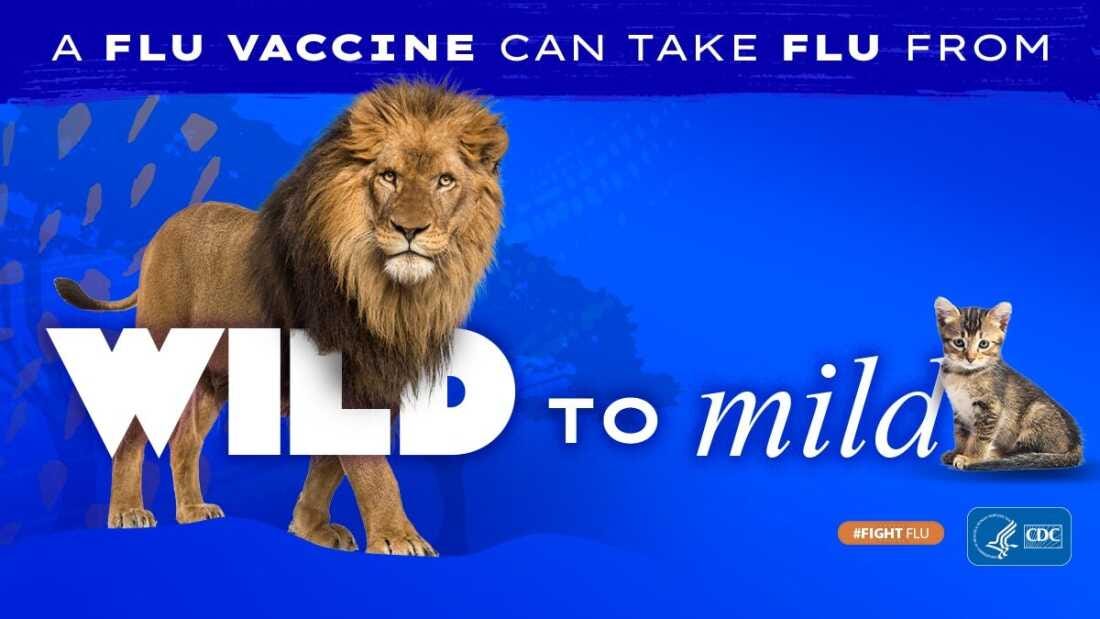
The primary goal of flu vaccines (and COVID-19 vaccines while we’re talking about this) is to reduce the risk of severe outcomes like hospitalizations, and deaths. Those were the primary endpoints (objectives) in the COVID-19 clinical trials, which continue to be misrepresented by folks who do not understand vaccine effectiveness. Some vaccines, like the measles, mumps, and rubella (MMR) vaccine are really good at preventing infection—that’s what make the herd immunity aspect of MMR vaccination so powerful. When a population is at least 95% vaccinated, we don’t see measles outbreaks.
This campaign emphasized the power of harm reduction, especially in large populations. In fact, It was clearly noted on the CDC website that the goal was to “reset public expectations around what a flu vaccine can do in the vent that it does not entirely prevent illness.” The campaign was also in response to dwindling flu vaccination rates, especially among high risk populations (children, and pregnant people). To date, only 45% of adults and children received a flu vaccine this season.
I’m sure you remember the popular phrase, “flatten the curve.”
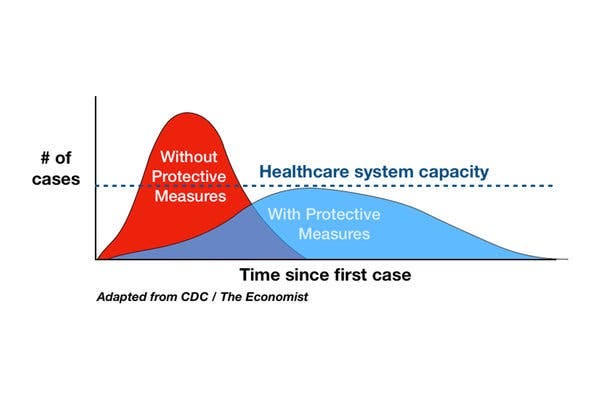
This was not unique to COVID-19. Our healthcare system can be easily overwhelmed, especially during respiratory virus season, when too many people require hospitalization.
I’m not here to spread panic. But, I am here to say—if you haven’t gotten your flu shot, it’s not too late.
All this, while we watch the United States’ botched response to the ongoing H5N1 avian influenza outbreak. Two new confirmed cases of H5N1 were reported this week, bringing the total number of known cases to 70. The last thing we need is for H5N1 to worsen and spread from human-to-human. We are unfortunately in a scenario in which it could—if the seasonal flu viruses circulating (H3N1 or H1N1) happen to reassort with H5N1 (swapping genes). That sort of shift in the virus could make it more capable of attaching to our upper respiratory tract. Again, it hasn’t happened yet, but if we continue to let both diseases spread with reduced visibility on cases and transmission dynamics, I fear we may be blindsided.
Do flu shots wear off like COVID vaccines? Wondering if I should try to get the shot again, or just continue best practices like masking. Thanks for this breakdown! Much appreciated
We have our flu shots - would it be advisable to stay home from trade shows, with a one year old? There’s one at Disneyland that’s stressing me out to decide if we go or not! Thank you as always for your educational content.